
The Role of AI in Post-Sale Marketing for Dealerships
The concept of a post-sale VSC contract marketing program is something that has existed for decades. The purpose is to try to convince more customers to purchase protection products after they leave the lot. The reality is that many customers decline F&I products when they are in the process of purchasing a vehicle.
In the past, direct mail campaigns have been what most VSC marketing campaigns have relied on. However, while direct mail efforts still have a place, they are far from the only method available for use. Since today’s buyers expect a fast and digital buying experience, the use of digital technologies to reach more customers has become the play for many dealerships.
The Shift in Customer Expectations
A big reason for changes in the post-sale marketing experience is due to rising customer expectations when interacting with dealerships. Most customers are not going to want to wait around for a piece of direct mail or a phone call. Instead, they would prefer to receive exclusive deals and offers digitally. This gives them something actionable that they can research and purchase themselves.
The marketing department’s job is not over just because a sale is closed. For automotive dealerships, maintaining a long-term revenue stream requires effort after a vehicle sale. It is necessary to stay in contact with customers post-sale to bring them back for the service drive or F&I products. Dealerships who want to maximize ROI cannot afford to let customers slip through their fingers post-sale. Unfortunately, customer expectations are rising higher than ever. Today’s buyers want fast, simplified communication, and they expect an elevated level of personalization in every interaction. Many dealerships are now using AI to assist with post-sale marketing.
Improve Marketing with Intelligent Engagement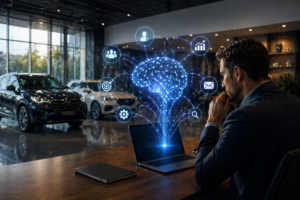
Dealerships have historically relied on static campaigns to manage their post-sale engagement. They send out direct mailers on a predetermined cycle after the initial purchase, manually connect through phone calls when they have time, and follow the same process for every customer. This traditional approach introduces a couple of key problems: a lack of precision and personalization, and poor timing.
Post-sale marketing now uses tools such as AI and predictive modeling that link with dealership CRMs to produce personalized content based on unique customer needs. It looks at the factors that matter to customers, from vehicle-specific information to the customer’s behavior before and during the purchase to determine what services are going to interest them. Furthermore, it can analyze lifecycle behaviors to establish the right time to message customers, so they have a higher likelihood of purchasing.
If you have been ignoring personalization efforts, it is time to make the switch. Today’s customers expect communication that fits their needs and preferences, with around 70% of them noting that they are more likely to buy again from a company that offers that high degree of personalization.
Improve Relevance and Speed Through AI-Powered Email and SMS
Email and SMS communication are two of the most effective ways to reach today’s customers. Even though email marketing ROI may not be as high as it once was, it remains a powerful tool for connecting with your audience, and SMS makes it simple to reach out to customers instantaneously.
Marketing using AI helps to streamline those communications, making them intelligently respond to customers’ actions and interactions with your business. That includes triggering messages based on:
- Direct customer behaviors (for example, looking up services on your website)
- Warranty expiration timelines
- Service intervals
- Major ownership milestones, including periods of higher maintenance needs
AI-driven marketing can also customize communications based on the customer’s specific vehicle type and when it is most likely to need services based on manufacturer recommendations. This segmentation leads to more relevant messaging and increased email open rates since customers can see that those messages are relevant to their current needs.
The same is true of SMS. AI provides instant, conversational engagement with customers when they connect with your dealership, responding immediately to customer queries to increase the likelihood of conversion. In fact, AI-powered messaging solutions can reduce response times, generating customer loyalty. That means that your dealership is likely to remain top of mind whenever customers need repeat services, F&I products, or are ready for a new vehicle.
Predictive Targeting: Reaching Customers at the Right Moment
When it comes to bringing customers back to the dealership after a sale, timing is critical. It is all about timing, connecting with customers at the right moment to prompt them to act due to a marketing message. Predictive analytics, powered by AI, can make a dramatic difference in this connection. AI tools can use historical data and individual customer behaviors to determine:
- When a customer will most likely purchase a VSC or other F&I product
- When customers need to return for future services
- The time customers are most likely to consider a new vehicle
AI does not just use broad timelines to determine those points. Instead, it focuses on individual customer needs and behaviors, from identifying when customers might need maintenance to establishing what market factors will encourage a new vehicle purchase.
The Future of Post-Sale Marketing: Intelligent Support
AI does not replace human interaction but enhances it. Using AI to assist with post-sale marketing, dealerships can communicate faster and personalize interactions based on unique consumer needs.
Contact Us Today
"*" indicates required fields


Customer Call Marketing for Automotive Dealerships
Customer Loyalty, Dealership, Marketing, SalesSelling a vehicle is a great achievement, but the relationship with that consumer shouldn’t end once they drive their new ride off the lot. To stay competitive in the automotive business, dealerships must have a plan to stay connected with their customers after the sale. Having that connection post-sale creates loyalty, generates additional revenue opportunities, and increases long-term retention.